

Western conservatism is searching for its soul — but is it listening to the Jews?

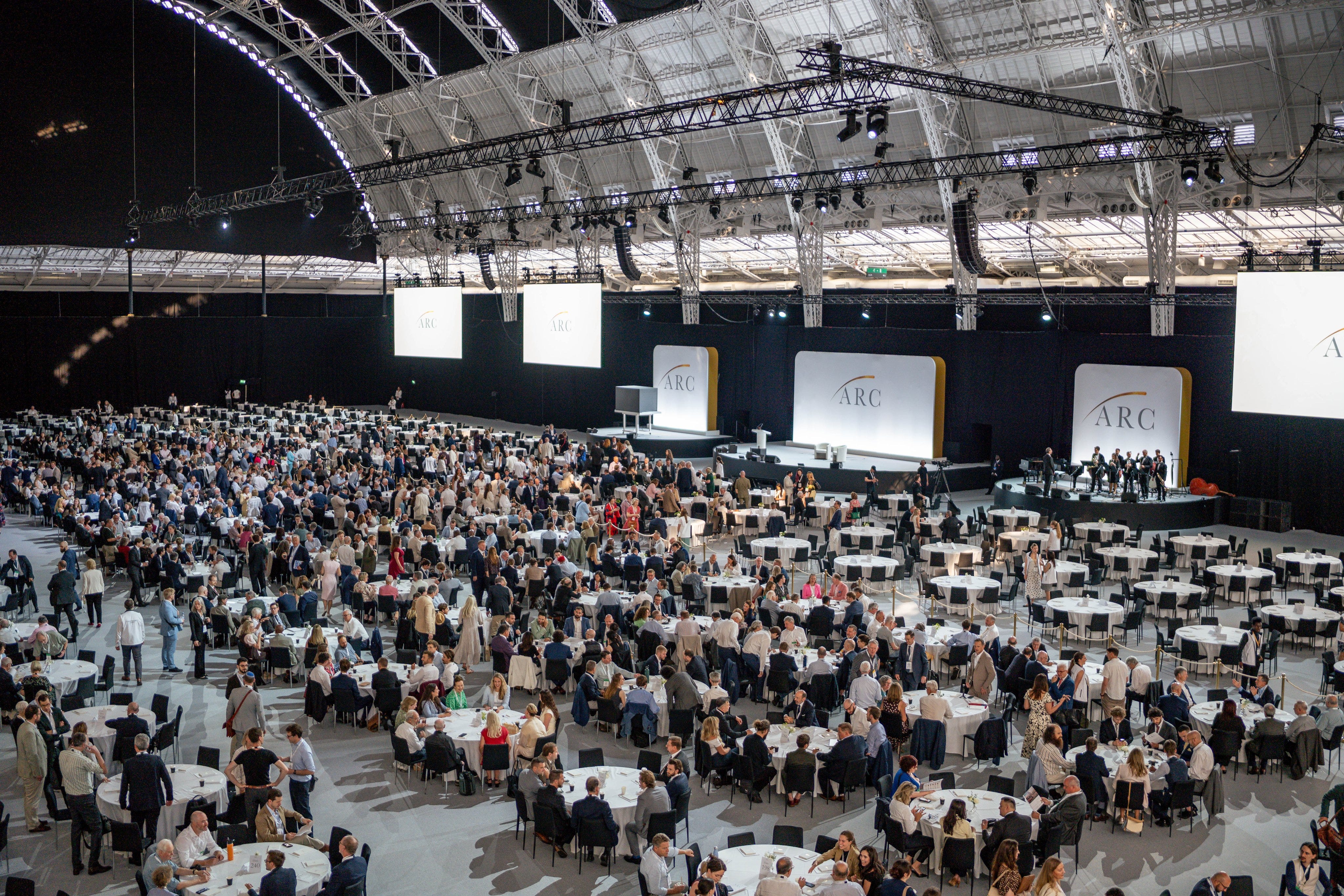
There is no better metaphor of Western civilisation’s struggle to keep up the fight against the destructive forces attacking our existence, than the air conditioning at London’s Olympia convention centre during this year’s ARC conference. It packed up at around 3pm on the first day of the event, which took place on three of the hottest June days in Britain’s history.
The 4,000 delegates from around the world were left to sweat it out in suits and business attire. Day two was even worse, as the sun streamed in through the glass panels of the glorious, giant Victorian greenhouse housing the event. By day three, which the programme informed me was dedicated to ‘reconstruction’ and rising from the ashes of civilisational disaster, the engineers had done their work and cool air circulated along with the speakers’ bright ideas and policies for the future. Many had abandoned their suits and ties, dressing instead for the beach, and revealing considerably more leg than might be normal at such a decidedly conservative gathering.
The experience felt like a physical representation of the philosophical struggle that the conference explored in depth: how to save ourselves as a group, by reviving an ancient (well, 124 years old in this case), man-made solution often taken for granted.
It was, in a way, quite a Jewish experience, like when we teach our history of slavery and redemption to the next generation every year at the Passover seder by actively tasting the bitterness of slavery in the herbs, drinking the tears of affliction in the salt water, and experiencing the haste of escape through the eating of unleavened bread. So it was that ARC’s delegates had a real, physical sense of the burning urgency of our civilisation’s disintegration, and the redemptive rediscovery of man’s ability to fix it.
Because the conference’s theme of ‘reconstruction’ aimed not only to recognise the ruptures in Western culture, but also the need for to rebuild, better, from the rubble of its destruction. In judaism, we talk of תקומה — revival, something many of us are desperately aiming for despite the darkness all around us. It is closer to a restoration, resurgence, or reconstitution than simply “rebuilding”.
While antisemitism was often mentioned at ARC as an urgent civilisational problem, it was addressed on somewhat Christian terms. For us Jews in the crowd, and there were many, Rick Ekstein’s stand-out speech perhaps hit home the most, when he told the story of his mother’s salvation by Christians during the Shoa, urging Christians, and others, today to stand up against injustice and protect Jews against the current wave of Jew-hatred flooding the world. Mathias Döpfner, CEO and controlling shareholder of Axel Springer, the incoming owner of the Daily Telegraph, described rising antisemitism as “the biggest disgrace of our times.”
Bringing the conference to an end, the theologian and social critic Os Guiness invoked Judaism again, reminding the crowd, “we owe a lot to the Greeks and much to the Romans, but our Western civilisation is essentially a Christian civilisation rooted in Judaism. That’s an inescapable fact and we must never forget it in the discussions, however uncomfortable.”
The deeper tension, for me, was that much of the conservative world now seems to be searching, with real seriousness, for its religious bedrock. That search is understandable. Politics has discovered, rather late, that institutions cannot survive on procedure alone. A civilisation needs metaphysics, memory, obligation, restraint. It needs some account of why a human being is sacred, why a family matters, why inherited wisdom deserves anything more than a sneer.
Yet from the Jewish seats in the hall, it seemed that an important Jewish angle on this search for faith could have been better explored.

The Christian language of renewal often seemed to reach for total devotion: belief declared, surrender made explicit, salvation placed at the centre of the story. Judaism moves differently. At least it has for us. It can carry tradition, law, practice, ethics, argument and doubt without requiring every serious religious instinct to announce itself in the same overt register of faith. It has room for the person who wrestles, the person who obeys before understanding, the person who questions so fiercely that the questioning itself becomes a form of fidelity.
My friend Rabbi Joe Dweck explained it well when we talked after the conference. Judaism, he said, has “a deep and old tradition of rigorous questioning and thought”, visible above all in the Talmud. Christianity has its own intellectual giants, Aquinas, Newton and many others, but its core claim rests on belief and acceptance: Jesus as saviour, original sin as the human predicament. The Jewish day begins somewhere else: “אלהי נשמה שנתת בי טהורה”, “My God, the soul You have given me is pure.”
At times, at ARC, I felt that difference more than ever. For the Christian imagination, refusal can carry catastrophic weight. For the Jewish imagination, even rebellion takes place inside covenant. We are difficult, argumentative, stiff-necked, often impossible. Yet beneath the argument sits something older than compliance. We are loved before we are useful, commanded before we are convinced, bound before we are impressive.
That may be why the Jewish contribution to any Western reconstruction cannot simply be folded into a Christian civilisational story, however generous or well-intentioned. Judaism is one of the sources of the West, but it is also one of its irritants, a voice from within and beside it, asking whether power can be sanctified without being restrained, whether tradition can survive without argument, whether faith can endure without the courage to quarrel with God.
The ARC movement is impressive, ambitious and intellectually rigorous. My own session on the future of the Middle East, during which I spoke on a panel alongside the Emirati commentator Amjad Taha, the Christian pastor Robert Stearns, and the former deputy Prime Minister of Australia John Anderson, further strengthened the message that collaboration and fraternity based on shared values and aims is vital for reinforcing our future. It is clear that we, as Jews, are more than just a litmus test, a warning light, or a historic foundational stone. We are, in fact, equal partners in finding the solution for a better future.
Originally published in The Algemeiner.
Thank you for being there, you rock thank God we have voices like yours